The Best Reason to Start Your Fitness Journey in 2026
Let’s be real. Perhaps the prospect of starting a workout routine is exciting for three days — and then life gets in the way.
You miss one session. Then two. Then suddenly, two weeks have passed and your gym shoes are gathering dust.
Sound familiar?
You’re not alone. The sad fact is that most beginners will quit in the first few months — it’s not down to a lack of motivation, but rather a lack of the right plan.
And that is precisely the reason the 2026 Health Guide was born. It combines the latest research into exercise science, nutrition, and mental performance to offer novices an actual, practical path forward.
In this article, we break down 7 of the strongest workout tips from that guide — in plain language, with no fluff or confusing jargon.
These tips can help you set up a routine that will actually stick, whether you’re starting from scratch or getting back on the wagon after an extended layoff.
Let’s get into it.
Tip #1 — Start Smaller Than You Think You Should
The #1 Mistake Everyone Makes on Day 1
The majority of novices do it too hard and too hastily.
They come on a Monday to transform their life. They do a 90-minute workout, use every machine in the gym, and on Tuesday wake up unable to go down stairs.
That soreness kills motivation fast.
The 2026 Health Guide takes an entirely opposite approach — begin smaller than seems necessary.
This isn’t about being lazy. It’s about being smart.
You start small, and your body gets used to it without falling apart. Your nervous system memorizes different movement patterns. Your joints and tendons — which require more time to strengthen than muscles do — have a chance to catch up.
What Starting Small Actually Looks Like
Here is a suggested beginner week structure for the first two weeks:
| Day | Activity | Time |
|---|---|---|
| Monday | Light full-body workout | 20–25 min |
| Tuesday | Rest or easy walk | 20-min walk |
| Wednesday | Light full-body workout | 20–25 min |
| Thursday | Rest | — |
| Friday | Light full-body workout | 20–25 min |
| Saturday | Active recovery (stretch/walk) | 15–20 min |
| Sunday | Full rest | — |
Three days a week. Twenty minutes per session.
That’s it.
It sounds almost too simple — and that’s the goal. You emerge from every session feeling good, not decimated. It is that positive feeling that brings you back.
Progress Over Perfection
Increase each week by 5 minutes or a few more reps. Slow progress compounded over months always outpaces aggressive starts that degenerate into injury or burnout.
Tip #2 — Prioritize Mastery in the “Big Five” Movements
The Importance of Exercise Selection for Beginners
You enter any gym and you will find hundreds of machines, cables, and free weights. It’s overwhelming.
The truth? You don’t need most of it — at least not when you start.
The 2026 Health Guide breaks novice fitness into five basic movement patterns, which work almost every muscle in the body. This is sometimes referred to as the “Big Five.”
The Big Five Movements
| Movement Pattern | Example Exercise | Muscles Worked |
|---|---|---|
| Push | Push-up, Dumbbell Press | Chest, Shoulders, Triceps |
| Pull | Row, Lat Pulldown | Back, Biceps |
| Hinge | Deadlift, Kettlebell Swing | Hamstrings, Glutes, Lower Back |
| Squat | Goblet Squat, Bodyweight Squats | Quads, Glutes, Core |
| Carry | Farmer’s Walk | Full Body, Core Stability |
If you’re working through all five of these patterns, you’re training your whole body in a balanced, functional way.
Why This Works So Well
These movements imitate real-life actions — opening a door, picking something up from the floor, going upstairs.
Training them develops a strength that carries into everyday living. You will be stronger not just in the gym, but when you are carrying groceries, playing with kids, or sitting at a desk for eight hours.
Beginners should focus first on mastering bodyweight versions of these movements. Once you’ve mastered your form, you add resistance.
Form before weight. Always.
Tip #3 — Warm Up Like You’re Serious
The Thing Most People Skip — and Pay for Later
Warming up is arguably the most neglected component of any workout.
People arrive, stretch for 45 seconds, and start lifting. That’s not a warm-up — that’s an injury waiting to happen.
There are three things a proper warm-up does:
- Increases your core body temperature — muscles perform better when warm
- Raises blood flow to the working muscles — delivers oxygen and nutrients
- Wakes your nervous system up — allowing for more powerful, controlled lifts
The 2026 Health Guide advises dynamic warm-ups over static stretching before working out. Static stretching (holding a stretch for 30+ seconds) before exercise can, indeed, temporarily decrease performance.
Quick Beginner Warm-Up in 5 Minutes
Try this before every session:
- Jumping jacks — 30 seconds
- Leg swings (front to back) — 10 reps each leg
- Hip circles — 10 reps per direction
- Arm circles — 10 per direction
- Bodyweight squats — 10 slow reps
- Inchworms — 5 reps
That’s five minutes. It takes almost no time and has a huge impact on how your body feels and performs during the workout.
Don’t Skip the Cool-Down Either
Do five minutes of light static stretching after your workout.
This lowers your heart rate gradually, minimizes muscle soreness, and enhances flexibility over time. Concentrate on any muscles you just worked.
Tip #4 — Train With a Purpose, Not Just to Put in Effort
Working Hard vs. Working Smart
If there’s one thing most beginners don’t hear enough, it’s this: effort isn’t everything.
You can be working super hard and making slow progress — if you’re not training with intention.
What does it mean to train with intention?
It means you understand what purpose every exercise serves. You can feel the proper muscles engaging. You dictate the movement rather than allowing momentum to carry you.
The Mind-Muscle Connection Is Real
Research indicates that continually concentrating on the muscle you are working helps activate it more.
In other words — when you are thinking about squeezing your chest while you do a push-up, your chest engages more than if your brain is wandering elsewhere.
This is called the mind-muscle connection. It’s not a myth. It’s backed by exercise science.
How to Apply Intentional Training
- Slow down your repetitions — adopt a 2-second lift and 3-second lowering phase
- Remove distractions — put the phone down between sets
- Feel where the tension is — if you don’t feel the correct muscle working, change your position
- Use a mirror when possible — monitoring your form allows you to correct it in real time
This shift in attitude — from “getting through” your workout to being fully present during it — significantly accelerates results for novices.
Tip #5 — Create a Recovery Routine That Fits Your Training
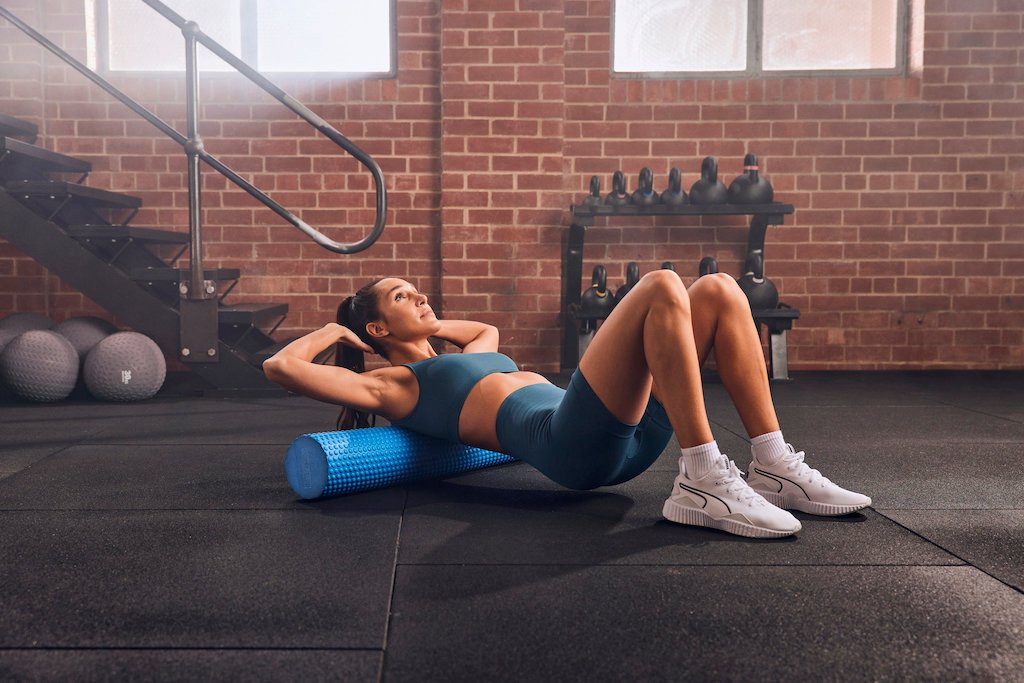
Recovery Isn’t Laziness — That’s Where the Progress Lives
Here is a fact that many beginners are shocked to hear:
You don’t get stronger by working out. You get stronger during recovery.
Whenever you work out, you cause small micro-tears in your muscle fibers. From rest and nutrition, those fibers repair themselves bigger and stronger than before.
If you bypass recovery, those fibers never completely heal. You get weaker, not stronger. Your injury risk spikes. Your motivation crashes.
The 2026 Health Guide emphasizes recovery as an absolute requirement of any beginner’s regimen.
The Four Pillars of Recovery
| Recovery Pillar | What to Do | Why It Matters |
|---|---|---|
| Sleep | 7–9 hours per night | Highest hormone release for muscle repair |
| Nutrition | Protein + carbs after workouts | Fuels muscle rebuilding |
| Active Recovery | Light walking, stretching, yoga | Increases blood flow without stressing muscles |
| Hydration | 2–3 liters of water daily | Flushes waste, reduces cramping |
The 48-Hour Rule for Beginners
Most novices should take at least 48 hours between training the same muscle group again.
So, for example, if you work out your legs on a Monday, wait until at least Wednesday to do another leg-based workout.
This allows your muscles to recover sufficiently before straining them again.
You can still work out on Tuesday — just do upper body or light cardio.
Tip #6 — Track Everything (Even If It Feels Like More Work)
Tracking: A Game Changer for Beginners
Beginner lifters often shy away from tracking because it seems like a chore.
But here’s the thing — what gets measured, gets improved.
Track your workouts to have a record of your progress. You can see just how much stronger you’ve become. You know what succeeded and what didn’t. You have evidence of your consistency on days when motivation is low.
Tracking also helps avoid a common pitfall known as “phantom progress” — where you feel like you’re working hard but you’re not getting any better because you’re doing the same weight and same reps week after week.
What to Track
You don’t need a fancy system. A simple workout log does the trick just fine.
Keep these five session metrics:
- Date and time of the workout
- Exercises performed
- Sets and reps completed
- Weight used (or difficulty level for bodyweight)
- How your body felt (energy level, soreness, mood)
That last point is more important than many people realize. How you feel can signal patterns of overtraining, under-eating, or insufficient sleep.
Tools You Can Use
- A pocket notebook (old-school but effective)
- Notes app on your phone
- Free apps like Strong, FitNotes, or Google Sheets
- A whiteboard at home
Choose one method and stick with it. It is more important to track consistently than to worry about which tool you use.
Progressive Overload — The Science of Getting Stronger
Tracking helps you apply one of fitness’s most essential rules: progressive overload.
This simply means progressively making your workouts harder over time.
Do one more rep. Add 2.5 kg to the weight. Reduce 10 seconds of rest between sets.
Small, incremental increases lead to colossal outcomes over time. But if you’re not tracking where you started, progressive overload becomes nearly impossible to apply. According to the American College of Sports Medicine, progressive overload is one of the foundational principles of any effective fitness program.
Tip #7 — Build the Habit Before Pursuing the Goal
The Ability to Form Good Habits Is Everything
Every beginner fixates on the goal mostly.
“I want to lose 20 pounds.” “I would like to bench 100 kg.” “I want six-pack abs by summer.”
Goals are great. They give direction.
But goals are not what get you to the gym three times a week for six months in a row. Habits do.
The 2026 Health Guide places huge emphasis on beginners forming habits — and the science supports this wholeheartedly.
Building a Lasting Workout Habit
Behavioral psychology studies suggest that three elements drive habits:
Cue → Routine → Reward
Here’s how to apply that to exercise:
- Cue: Give your workout a dedicated time and place. “I train at 7 a.m. in my living room” or “I train directly after work on Tuesday, Thursday, and Saturday.”
- Routine: Stick to a workout structure. Minimize the decisions you have to make.
- Reward: Treat yourself after the workout — a smoothie, an episode of a favorite show, 10 minutes of reading. Your brain learns to connect the workout with the reward.
The Two-Day Rule
One of the most powerful habit strategies from the 2026 Health Guide is the Two-Day Rule.
It’s simple: skip no more than two days in a row.
Life happens. You’ll miss workouts. That’s fine.
But if you never allow yourself to miss more than two days in a row, you’ll never lose all your momentum. The habit always returns before it is fully broken.
Identity-Based Fitness
The most effective fitness habits are linked to identity, not results.
Rather than saying “I’m trying to lose weight,” say “I’m someone who works out regularly.”
That identity change affects your decision-making. When someone gives you an excuse not to go to the gym, you think “but that isn’t who I am” — and so you show up anyway.
Quick Reference: 7 Tips at a Glance
| # | Tip | Core Principle |
|---|---|---|
| 1 | Start smaller than you think | Prevent burnout, develop consistency |
| 2 | Master the Big Five movements | Full-body efficiency |
| 3 | Warm up with purpose | Injury prevention and performance |
| 4 | Train with intention, not just effort | The mind-muscle connection |
| 5 | Build a real recovery routine | Progress happens during rest |
| 6 | Track everything | Progressive overload + accountability |
| 7 | Build habits before chasing goals | Long-term consistency over short bursts |
Bonus: Beginner Food Guide (Quick Reference)
Nutrition is a broad enough topic that we can’t begin to cover all of it here — but the 2026 Health Guide provides beginners with an easy framework. For a deeper dive into how food choices affect your workout performance and overall wellbeing, visit Health Benefits 2026 — a great resource packed with practical health and nutrition tips to complement your fitness journey.
Protein: Aim for around 1.6–2.2 grams of protein per kilogram of bodyweight each day. Protein rebuilds muscle after workouts. Sources include chicken, fish, eggs, lentils, Greek yogurt, and tofu.
Carbohydrates: Don’t fear carbs. They are your body’s most-used fuel source. Things like rice, oats, sweet potatoes, and fruit make for great options near workout times.
Fats: Healthy fats support hormones, even those related to muscle growth. Good choices include avocados, nuts, seeds, and olive oil.
Hydration: Have water before, during, and after each session. Dehydration diminishes strength, endurance, and concentration — sometimes by 10 to 20 percent.
Keep it simple. Eat mostly whole foods. Do not skip meals on training days.
FAQs — Beginner’s Workout Tips (2026 Health Guide)
How many days a week should a beginner exercise?
For most people, three days a week is the right place to start. It’s enough to encourage progress but leaves space for recovery. Once you get fitter over 6–8 weeks, a fourth day may be added.
Can I follow these workout tips without a gym membership?
Not at all. Many of the Big Five exercises — squats, push-ups, rows using a resistance band, hinges — can be performed at home with little or no equipment. The gym provides more variation and heavier weights, but it is not required at the beginning.
How long does it take for beginners to see results?
Strength gains will be noticeable within 2–3 weeks in most beginners. Body composition changes are usually visible after 6–12 weeks, depending on consistency, diet, and starting point. Don’t chase speed — chase consistency.
Should every workout leave you sore?
Some degree of soreness is normal if you’re new to working out or trying something different. But you shouldn’t be completely wrecked after every session. If you are, you are likely training too hard. Turn down the volume and intensity until your body catches up.
Should beginners use supplements?
Most beginners don’t need supplements. Whole food nutrition covers the basics for nearly all people. A straightforward protein powder can at least help you reach your daily protein goals easily, if anything. All other things — pre-workouts, fat burners, etc. — are secondary and not essential for beginners.
How to stay safe while following these fitness tips?
Always consult a physician or other qualified health provider before embarking on any exercise program, particularly if you suffer from an existing health condition, injury, or haven’t exercised in many years. Most conditions may not preclude exercising — they just need to be adapted.
What if I skip working out for one week?
Don’t panic. Missing a week does not nullify your progress. All you have to do is resume where you left off. You might feel a little weaker or winded during that first session back — this is normal. You regain fitness more quickly than it took to build in the first place.
The Bottom Line — Your Fitness Journey for 2026 Starts Here
Getting in shape for the first time does not need to be complicated.
You can do this without an expensive gym. You don’t need a personal trainer. You don’t need to have your diet 100% right from the very start.
What you need is a good plan, realistic expectations, and the patience to let the process run.
The 7 science-backed workout tips from the 2026 Health Guide provide exactly that — a proven baseline for crafting a body and lifestyle you can be proud of.
Start small. Move well. Rest properly. Track your progress. Build the habit first.
Do those five things consistently, and the results will come — not in weeks, but over months. And those results will stick because they were built on something that actually is sustainable.
The best workout is the one where you show up. Again and again and again.
Now go show up.