
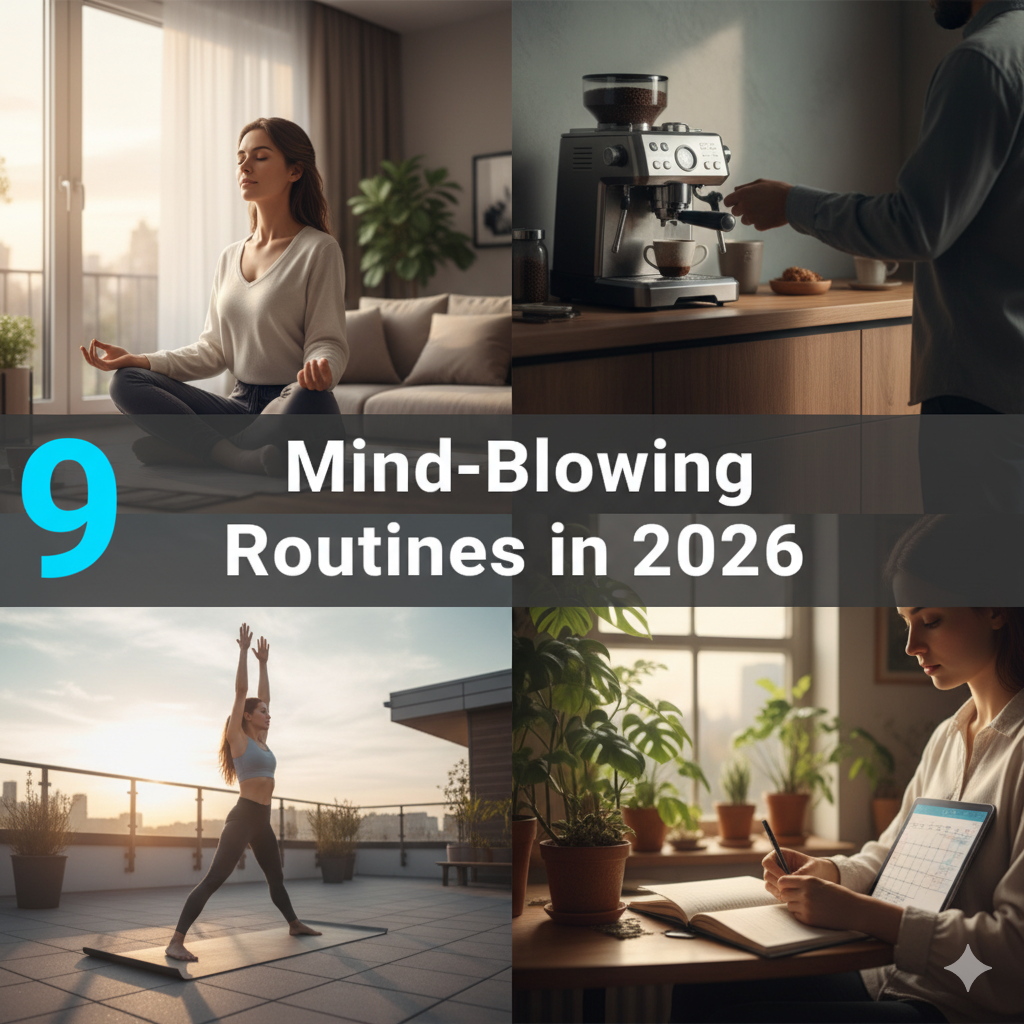
What you do in the morning sets the pace for everything else that unfolds. The way in which you use the first 60 to 90 minutes after waking can either invigorate your entire day — or slowly sap it dry before it has a chance to get going.
In 2026, health experts, sleep scientists and wellness coaches are all converging on one truth: Your morning routine is one of the most powerful levers you have for long-term health.
This guide includes 9 practical, science-backed and easy-to-implement morning routines – even if you are not a morning person.
These habits will help you establish a morning that works for you, whether your aim is extra energy, improved focus, maintaining weight or a calmer mind.
Daily Routine: Why Morning Matters More Than You Think
The average person wakes up to check their phone. Within minutes, they’re scrolling through the news, social media or emails. It forces your brain into reactive mode way before the day even starts.
Studies show that the habits you choose to do in the morning have a direct effect on your cortisol levels, mood, focus and even your metabolism. Cortisol — your body’s own wake-up hormone — rises 30 to 45 minutes after you get up. This phenomenon is known as the Cortisol Awakening Response (CAR).
If you use this time well, you will have a day with razor-like reflection and energy.
If you spend it on stress and screen time, your body suffers.
| Morning Habit | Benefit |
|---|---|
| Drinking Water | Accelerates metabolism, clears brain fog |
| Exercise | Raises energy and mood hormones |
| Sunlight | Regulates sleep-wake cycle |
| Mindfulness | Reduces stress and anxiety |
| Healthy Breakfast | Keeps blood sugar stable |
| No Phone for 30 Minutes | Improves mental clarity |
| Cold Water Rinse | Increases alertness |
| Journaling | Improves emotional health |
| Deep Breathing | Activates calm nervous system |
Now, let us go into detail for each of them.
Ritual #1 — Drink Water First Thing in the Morning

Hydration Is Key
Your body has gone 7 to 9 hours without water while you sleep. By the time your alarm rings, you’re already a little dehydrated. This creates that groggy, slow feeling most people wake up with.
One of the simplest and most powerful things you can do is drink 1 to 2 glasses of water (around 400–500ml) within the first 10 minutes when you wake up.
It revs your metabolism, flushes out toxins that accumulated overnight and nudges your brain to reach alert mode more quickly.
Make It Even Better
Add a squeeze of fresh lemon to your water. Lemon has vitamin C in it and helps liver detoxification more efficiently. It also aids digestion and gives your immune system a modest but real morning boost.
Others add a sprinkle of sea salt or electrolytes to replenish minerals lost overnight.
Tip: Place a glass of water on your nightstand before sleeping. It’s the first thing you’ll want to grab when you wake up — no effort involved.
Routine #2 — Go Outside and Get Morning Sunlight
Your Internal Clock Requires Light to Function
Your body operates on an internal clock known as the circadian rhythm. This 24-hour biological clock dictates when you feel awake, when you feel sleepy, when your digestion revs up and even when your immune system is at its most active.
The most important signal that resets this clock each day is morning sunlight.
When natural light strikes your eyes in the first hour of waking, your brain secretes serotonin — the “feel good” chemical. It also signals your body to stop making melatonin (the sleep hormone), which makes you feel alert and awake.
Neuroscientist Dr. Andrew Huberman, whose work exploded in popularity in 2025 and 2026, refers to this as “the single most important thing you can do for your sleep and mental health.”
How to Do It
- Just after you wake, go outside for 5 to 10 minutes
- No sunglasses — you want as much light going straight into your eyes as possible
- Outdoor light, even on cloudy days, is 10x stronger than the lighting found indoors
- Add a brisk little stroll for added bonus points
If you’re living somewhere where the morning light is scarce (think winter in northern latitudes), a 10,000 lux light therapy lamp for 20 minutes can have similar effects.
Routine #3 — Get the Body Moving in the First Hour

Morning Exercise Alters Your Brain Chemistry
You don’t need a long gym session. Just 15 to 20 minutes of movement in the morning drastically increases your energy and improves your mood and focus for hours afterward.
Exercise has been shown to stimulate the secretion of dopamine, serotonin and endorphins — all known as happy chemicals that help you feel motivated, happy and alert. It also raises your core body temperature, which sends wakefulness signals to every cell in your body.
Research published in the British Journal of Sports Medicine indicates that exercising in the morning leads people to feel more focused, respond faster and experience lower stress levels throughout the day.
Best Morning Workouts for Every Goal
| Goal | Best Morning Workout |
|---|---|
| Lose Weight | 20-min brisk walk or fasted cardio |
| Build Muscle | Strength training (compound lifts) |
| Reduce Stress | Yoga or stretching |
| Boost Energy | Jump rope or bodyweight HIIT |
| Improve Focus | Slow jog or cycling |
Begin with something you genuinely like. A 15-minute walk trumps a one-hour gym membership you’ll give up after three days.
Routine #4 — Never Miss a Grounding Breakfast
Food Is Information for Your Body
Breakfast is not only fuel — it’s data. What you eat in the morning signals what kind of day it will be for your body.
A high-sugar breakfast (cereal, pastries, juice) makes your blood sugar spike upward and then crash down. You’ll feel good for 20 minutes, then foggy and irritable for the next three hours.
A breakfast with plenty of protein and fiber keeps blood sugar steady, energy stable and hunger in check until lunch.
The Ideal 2026 Morning Plate
In 2026, health experts recommend you frame your breakfast around:
- Protein (eggs, Greek yogurt, cottage cheese, tofu) — 20 to 30 grams
- Healthy fats (avocado, nuts, seeds, olive oil) — for brain function
- Fiber (berries, oats, vegetables) — for gut health and sustainable energy
- Complex carbs (sweet potato, whole grain toast) — for sustained energy
Sample Breakfast: 2 scrambled eggs + half an avocado + a handful of blueberries + a slice of whole grain toast. Simple, fast, and incredibly effective.
For more evidence-based nutrition tips and wellness strategies, visit Health Benefits 26 — a great resource for building a healthier daily lifestyle.
Routine #5 — Do 5 Minutes of Mindfulness or Meditation
Calm Your Brain Before the World Tries to Stress It
Meditation can be intimidating, but it doesn’t have to be. Even 5 minutes of quiet, purposeful breathing can change the wiring in your brain that regulates how you deal with stress throughout the day.
Research conducted at Harvard Medical School shows that consistent practice of mindfulness changes your brain — it shrinks the amygdala (the fear and stress center) and thickens the prefrontal cortex (your decision-making and focus center).
A Simple 5-Minute Morning Practice
- Get comfortable — on a chair, floor or your bed
- Close your eyes and inhale slowly for a count of 4
- Hold for 4 counts
- Slowly exhale for 6 counts
- Repeat for 5 minutes
That’s it. No apps required. No special cushion. No years of training.
If you prefer a little structure as you get started, try apps like Calm, Headspace or Insight Timer for guided morning meditations.
Routine #6 — Don’t Touch Your Phone for the First 30 Minutes
The Scroll Is Robbing You of Your Sharpest Brain Hours
This one is hard. But it may be the most important change you can make.
When you go to your phone first thing in the morning, you immediately overwhelm your brain with information — messages, news, social media reactions, notifications. Your brain skips sleep mode and heads straight to overwhelm mode.
That activates your stress response before you’ve even had an opportunity to think your own thoughts.
Right after you wake, your brain is actually in its most creative, calm and focused state. The brainwave pattern in this golden time period (known as alpha waves) is the same one top performers and athletes seek out during deep work.
By safeguarding this window, you are safeguarding your creativity, clarity and emotional stability.
Tips for Avoiding the Phone
- Do not charge your phone in the bedroom
- Use an old-fashioned alarm clock
- Set a timer for 30 to 60 minutes after waking — phone-free
- Instead of scrolling, try reading, journaling or doing some stretches
Routine #7 — Experiment With a 30-Second Cold Water Rinse
Cold Water Revives Every Cell in Your Body
You don’t need an ice bath. Just 30 seconds of cold water at the end of your shower can produce real, measurable health benefits.
Immersing yourself in cold water triggers your body to release norepinephrine — a hormone and neurotransmitter that massively enhances alertness, mood and focus. Research suggests it increases norepinephrine by 200 to 300%.
It also supports circulation, reduces inflammation and has been associated with improved immune function over time.
How to Begin — and Not Hate It
- Take a warm shower as you normally would
- Switch it to cold in the final 30 seconds
- Breathe smoothly and evenly — do not hold your breath
- Work up to 60 to 90 seconds over 2 to 3 weeks
The majority of those who try it consistently for two weeks say they actually learn to look forward to it. The energy boost afterward is real and noticeable.
Routine #8 — Journal 3 Things
Journaling Is Like a Workout for Your Brain
Journaling doesn’t mean writing pages of deep self-exploratory thoughts. A simple 3-item morning journal takes less than 5 minutes and can dramatically change your mental health, focus and sense of purpose.
According to research from the University of California, individuals who do daily gratitude journaling are more likely to experience:
- 23% reduced cortisol (stress hormone) levels
- Better sleep quality
- Higher reported happiness and lifelong satisfaction
- Stronger immune function
The Simple Morning Journal Format
Each morning, write:
- 3 things you’re grateful for (be specific — not just “family” but “my sister called me last night”)
- 1 thing you’re excited about today
- 1 intentional theme or focus for the day
That’s it. Three minutes. Massive results over time.
You can also do a short “brain dump” — just get anything bothering you or lingering in the back of your mind down on the page. Writing things down gets them out of your head and reduces anxiety significantly.
Routine #9 — Decide on a Clear Intention for the Day
Direction Beats Speed Every Time
The most productive, mentally healthy people don’t simply respond to their day. They already know what comes first.
A daily intention is not a to-do list. A to-do list is about tasks. An intention is about how you want to show up — mentally and emotionally.
Examples of powerful daily intentions:
- “Today I will concentrate on one thing at a time.”
- “I will respond with calm today, rather than quick reaction.”
- “I will focus on myself today, not others.”
This practice aligns your morning energy with your deeper goals and values. It’s the bridge between a healthy morning and a productive day.
Pair It With a Mini Planning Session
Take 5 minutes to review your top 3 priorities for the day. Not everything you need to do — just the 3 things that would make today a success if they were done.
It helps avoid that draining feeling of being “busy all day but getting nothing done.”
How to Build These Routines Without Burning Out
Start Small, Stack Slowly
Attempting all 9 routines on Day One is a recipe for burnout. Instead, try habit stacking — the practice of adding a new habit onto one you already have.
For example:
- Immediately after you shut off your alarm → drink your glass of water
- After drinking water → go outside for sunlight
- After sunlight → do 10 minutes of movement
Over 2 to 4 weeks, these small actions become second nature. Then you add the next one.
A Sample 60-Minute Morning Routine
| Time | Activity |
|---|---|
| 0–5 mins | Wake up, drink water |
| 5–15 mins | Go outside for sunlight + short walk |
| 15–30 mins | Exercise (bodyweight, yoga or walk) |
| 30–35 mins | Cold rinse at end of shower |
| 35–45 mins | Protein-rich breakfast |
| 45–50 mins | Meditate or deep breaths |
| 50–55 mins | Journal (3 gratitudes + 1 intention) |
| 55–60 mins | Review top 3 priorities for the day |
This routine covers all 9 pillars and fits within one hour. You can compress or expand it depending on your schedule.
The 2026 Morning Routine Mindset Shift
What the latest health research continues to show is this: consistency trumps perfection.
You don’t need a perfect morning. You need a good enough morning, done day after day.
Miss a day? Start fresh the next morning. Had a terrible night’s sleep? Do the shorter version. Traveling? Do what you can with what you have.
It is not about executing a flawless wellness ritual. The point is to treat your body and mind with care, every single morning, out of self-respect.
When you look at your morning routine this way — as a gift to yourself instead of just another to-do — it becomes something you cherish, not something you dread.
FAQs
Q: How long should a morning routine take? A: It can be anywhere from 15 to 90 minutes long. What matters most is consistency. Begin with 20 to 30 minutes and then increase, depending on what seems sustainable.
Q: I’m not a morning person — what do I do? A: Start with getting up just 15 minutes earlier than your normal waking time. Your body clock will naturally start to shift over two or three weeks. The fastest way to become more of a morning person is exposure to sunlight in the morning.
Q: Is it bad to drink coffee first thing in the morning? A: Most health experts in 2026 believe you should wait about 60 to 90 minutes after waking before consuming caffeine. This will let your cortisol levels naturally peak first. Consuming coffee too early can cut down on its efficacy and make for a bigger afternoon crash.
Q: Should I exercise every morning? A: No. Getting through 3 to 4 mornings a week is sufficient to obtain real benefits. On other mornings, a brief stretch or walk does just fine.
Q: Should children and teenagers follow these morning routines? A: Absolutely. Morning sunlight, a full breakfast, hydration and screen-free time are particularly important for kids and teens. These habits help foster better attention in school and sounder emotional regulation.
Q: What is the single most important morning habit? A: If you can do only one thing, drink water and get outside for sunlight within 30 minutes of waking. Just these two habits create the greatest benefit for energy, mood and circadian rhythm.
Q: When will I see results from a morning routine? A: Most people report feeling more energy and a better mood within the first week. Deeper changes — better sleep, less anxiety, improved focus — tend to appear after 3 to 4 weeks of consistent practice.
Wrapping It All Up
The 9 morning routines in this 2026 health guide aren’t fads or hacks. They are based on decades of research about how the human body and brain work best.
Each one is simple. Each one is doable. And combined, they make a morning that prepares you not only for a productive day — but for a longer, healthier and more fulfilling life.
You don’t have to be perfect. You just have to start.
Select any one routine from this list. Do it tomorrow morning. Then add another the next week.
Small steps, taken consistently, create tremendous results over time.
Your healthiest life doesn’t start with a huge transformation. It starts with tomorrow morning.