Why Stretching Is the Most Underappreciated Health Thing You Can Do in 2026
Most people hit the gym. They lift weights. They run miles.
But they skip stretching.
That’s a big mistake.
The 2026 Health Guide — a complete wellness toolbox built on the newest science — places stretching at the very top for a reason. Flexibility training isn’t only for gymnasts and yogis. It’s for anyone who works at a desk, stands all day, carries groceries, or who just wants to feel better in their bodies.
Let me tell you the truth: Your muscles get tight every day. Stress, poor posture, sustained sitting — they all shorten your muscle fibers and restrict your movement. That, in turn, causes pain, poor posture, and ultimately injury.
Stretching cures all of that — with time, yes.
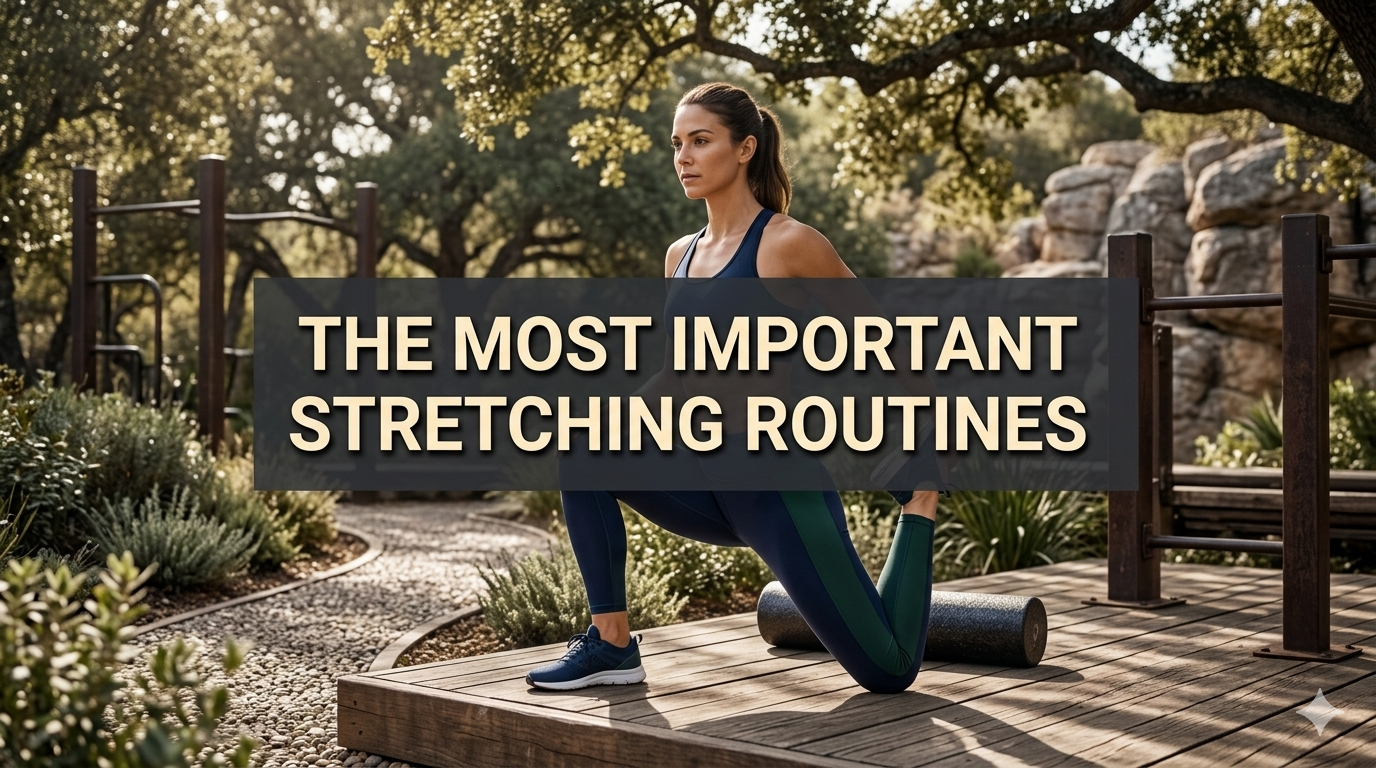
In simple terms, this guide is a breakdown of the 5 must-know stretching routines derived from the 2026 Health Guide. Every routine focuses on a certain element of your body and daily life. Whether you’re a student, an office worker, an athlete, or a senior citizen, we have some tools for you.
Let’s get into it.
What Constitutes an “Essential” Stretching Routine?
All stretches are not created equal.
The 2026 Health Guide didn’t simply choose random movements. All of the routines were selected for three reasons:
- Effectiveness — Is it actually helpful for improving flexibility and lessening pain?
- Accessibility — Can a majority of people perform it without specialized equipment?
- Daily relevance — Is it solving real issues people deal with every day?
The five routines you’ll read about below make all three cuts. They are based on current sports science and physical therapy research. They’re also intended to work in a real schedule — not an ideal one.
Routine #1 — The Morning Stretch Wake-Up Series

This Is What Your Body Needs After Sleep
Consider what happens when you go to bed.
You sleep in one position for 6–9 hours. Your muscles cool down. Blood flow slows. Your spine compresses slightly. By the time your alarm goes off, your body is stiff, achy, and not prepared to move quickly.
That’s totally normal — but also correctable.
The 2026 Health Guide’s Morning Wake-Up Stretch Series is a gentle, 7–10 minute routine to wake up your body. It boosts circulation, loosens the joints, and informs your nervous system that it’s time to move.
The 5-Move Morning Sequence
Do each stretch slowly. Hold for 20–30 seconds. Breathe deeply through each one.
| Move | Target Area | Duration |
|---|---|---|
| Supine Knee-to-Chest | Lower back, glutes | 30 sec each side |
| Cat-Cow Stretch | Spine, core | 10 slow reps |
| Seated Neck Rolls | Neck, upper traps | 30 sec each direction |
| Standing Hip Circles | Hips, lower back | 10 reps each direction |
| Full-Body Reach Stretch | Spine, shoulders, calves | 30 sec |
How to Make It a Daily Habit
The major obstacle to morning stretching is not difficulty — it’s habit.
Here’s a little hack: stretch before you pick up your phone. Keep a yoga mat next to your bed. The second you wake up, roll onto your mat and get moving.
In two weeks, your body will actually crave this routine.
Routine #2 — The Desk Jockey Decompression Routine
How Sitting All Day Is Harming You Without Your Realizing It
Sitting is the new smoking — or so health researchers have been telling us for years.
Many things go awry when you sit for hours on end. Your hip flexors shorten. Your chest tightens. Your upper back rounds forward. Your neck pushes out in front of your shoulders. That combination creates something known as “desk posture” — and it results in chronic pain of the neck, shoulders, lower back, and hips.
The 2026 Health Guide confronts this directly with a focused decompression routine designed specifically for desk workers.
Stretches You Can Do Right at Your Desk
Yes — some of these can be done right from your desk.
Chest Opener Stretch Sit up tall. Interlace fingers behind the back. Retract your shoulder blades and lift up through your chest. Hold for 20 seconds. This counteracts the “hunched forward” position that develops during screen time.
Seated Spinal Twist Sit sideways in your chair. Grasp the back of the chair with both hands. Rotate your torso gently. Hold 20 seconds on each side. This alleviates spinal compression caused by sitting for long periods.
Hip Flexor Lunge Stretch Stand tall. Take one step forward into a lunge. Drop your back knee to the floor. Push your hips forward gently. Hold 30 seconds each side. This works on the hip flexors that tend to tighten and shorten when you sit.
Upper Trap Stretch Sit or stand up tall. Tilt your right ear toward your right shoulder. Put your right hand lightly on top of your head. Don’t yank — simply let the weight of your hand make a soft stretch. Hold 20 seconds per side.
The 3-2-1 Rule for Stretching at Your Desk
The 2026 Health Guide recommends the so-called 3-2-1 Rule:
- Every 3 hours, go for a 2-minute stroll
- Every 2 hours, complete 1 round of the desk stretches
- Every 1 hour, do 1 simple stretch (for instance, a chest opener or a neck tilt)
That rhythm prevents your muscles from seizing up during lengthy work sessions.
Routine #3 — Athletic Performance Stretch Routine
Stretches to Use for Speed, Power, and Injury Prevention
There is one mistake that athletes and active people often make: they only stretch after something hurts.
That’s reactive. The 2026 Health Guide turns that recommendation on its head — advocating proactive stretching — the kind you do regularly, before any problems arise.
This routine centers on two types of stretching that complement each other:
Dynamic stretching — before your workout. That means moving stretches that help warm up the muscles and improve blood flow. Think leg swings, arm circles, and walking lunges.
Static stretching — following your workout. It involves holding poses to stretch the muscles out and help them recover.
Pre-Workout Dynamic Warm-Up (5–8 Minutes)
| Dynamic Stretch | Reps | Muscle Group |
|---|---|---|
| Leg Swings (forward/back) | 10 each leg | Hamstrings, hip flexors |
| Arm Circles | 15 each direction | Shoulders, chest |
| Walking Lunges with Reach | 10 total | Quads, core, hips |
| High Knees | 20 reps | Hip flexors, calves |
| Lateral Leg Swings | 10 each leg | Inner thighs, glutes |
Post-Workout Static Cool-Down (8–10 Minutes)
Your muscles are warm and pliable after your workout. This is the time to work on flexibility.
Pigeon Pose — focused on the glutes and external hip rotators. Hold 45 seconds per side.
Standing Quad Stretch — grab your ankle behind you, stand tall, squeeze those glutes. Hold 30 seconds per side.
Doorway Chest Stretch — with both arms resting on a door frame, gently lean forward. Hold 30 seconds.
Seated Forward Fold — sit on the ground with legs extended. Reach toward your toes. Hold 45 seconds.
Cross-Body Shoulder Stretch — bring one arm across your chest. Hold 20 seconds per side.
Why Athletes Who Stretch Consistently Perform Better
The 2026 Health Guide cites research indicating athletes on a regular stretching program have fewer muscle strains, recover faster, and experience improved range of motion in their joints over the long term.
Flexibility is not a “nice to have.” For athletes, it’s a performance enhancer.
According to the Mayo Clinic, regular stretching keeps muscles flexible, strong, and healthy — and that flexibility is needed to maintain a full range of motion in the joints.
Routine #4 — The Full-Body Stretch for Stress Release
How Stress Connects to Your Muscles and Tension
Here’s something almost nobody knows.
Emotional strain and physical tightness reside in the same body.
When you’re frazzled or overwhelmed, your body literally tenses up. Your shoulders hunch up toward your ears. Your jaw clenches. Your lower back contracts. This is your nervous system reacting to stress — it’s known as the “fight or flight” response.
The challenge is that today’s world does not switch off the stress. So the tension just… stays.
The 2026 Health Guide has a dedicated stress-release stretch routine that focuses on the parts of the body that hold the most emotional tension: the neck, shoulders, chest, and hips.
For more tips on how daily wellness habits connect to long-term health, visit Health Benefits 26 — a great resource for practical health and fitness guidance.
Tension Hot Spots and the Stretches That Fix Them
| Body Area | Why It Holds Tension | Best Stretch |
|---|---|---|
| Neck & Jaw | Mental stress, screen time | Neck rolls, jaw release |
| Shoulders | Anxiety, poor posture | Cross-body stretch, chest opener |
| Upper Back | Hunching forward, overthinking | Cat-Cow, thoracic rotation |
| Hips | Emotional tension, prolonged sitting | Pigeon pose, butterfly |
| Lower Back | Stress overload, weak core | Child’s pose, knee-to-chest |
The Stress-Release Sequence (15 Minutes)
This routine is most effective in the evening — preferably before you go to sleep.
Step 1 — Child’s Pose (2 minutes) Kneel down on the floor. Lean your hips back toward your heels. Keep your arms extended out on the floor in front of you. Rest the forehead down on the floor. Breathe slowly and deeply. This is the most soothing position for the nervous system.
Step 2 — Butterfly Stretch (90 seconds) Sit on the floor. Bring the soles of your feet together. Let your knees fall outward. Grab your feet and pull your knees toward the floor. This stretches the inner thighs and hips — two areas where stress and anxiety tend to store.
Step 3 — Supine Twist (90 seconds each side) Lie on your back. Hug your right knee in to your chest. Then lower it over your body to the left. Open your right arm out toward the side. Look right. Breathe deeply. Switch sides.
Step 4 — Legs Up the Wall (3 minutes) Lie down on your back. Scoot your hips close to a wall. Extend your legs up the wall. Allow your arms to hang at your sides. This position reverses blood flow and lets your nervous system know it can relax.
Step 5 — Savasana with Deep Breathing (3 minutes) Lie on your back. Close your eyes. Inhale for 4 counts, hold for 4 counts, exhale for 6 counts. Let every muscle soften.
Why This Routine Is Ideal Before Bed
The 2026 Health Guide highlights the link between flexibility work and sleep quality.
A few minutes of stretching before bed will decrease cortisol (the stress hormone), relieve muscle tension, and calm your nervous system. All of which leads to deeper, more restorative sleep.
People who regularly follow this routine often report falling asleep more quickly and waking up with less stiffness.
Routine #5 — The Flexibility Plan for Aging Well
Why Stretching Becomes More Important as You Age
Here’s a tough truth: as you get older, you become less flexible.
Muscle elasticity declines after the age of 30. Joints get stiffer. Recovery takes longer. The likelihood of injury increases.
But here’s the silver lining: regular stretching can decelerate this process significantly.
The 2026 Health Guide devotes a full chapter to stretching for older adults — defined as adults age 50 and above. The message is clear. It’s never too late to start. And the rewards compound over time.
Safe Stretching Guidelines for Adults 50 and Up
Before getting into the specific stretches, the 2026 Health Guide notes a few fundamental safety principles for mature adults:
- Never bounce — use slow, controlled movements only
- Pain is a stop sign — discomfort is fine; sharp pain is not
- Use aids — chairs, walls, and straps are tools, not signs of weakness
- Warm up first — even a 5-minute walk before stretching makes a difference
- Consistency beats intensity — gentle daily stretching is better than aggressive weekly sessions
The Aging Well Stretch Sequence
Chair-Supported Quad Stretch Stand behind a sturdy chair. Hold the back for balance. Bend one knee and pull your heel to your glute. Hold 20 seconds. Switch sides.
Seated Hamstring Stretch Sit on the edge of a chair. Extend one leg forward with your heel touching the floor. Sit tall and lean slightly forward from your hips. You should feel a stretch in the back of your thigh. Hold 30 seconds per side.
Wall Calf Stretch Stand facing a wall. Step one foot back. Press the back heel flat to the floor. Lean into the wall gently. Hold 30 seconds per side. This helps with ankle mobility and reduces fall risk.
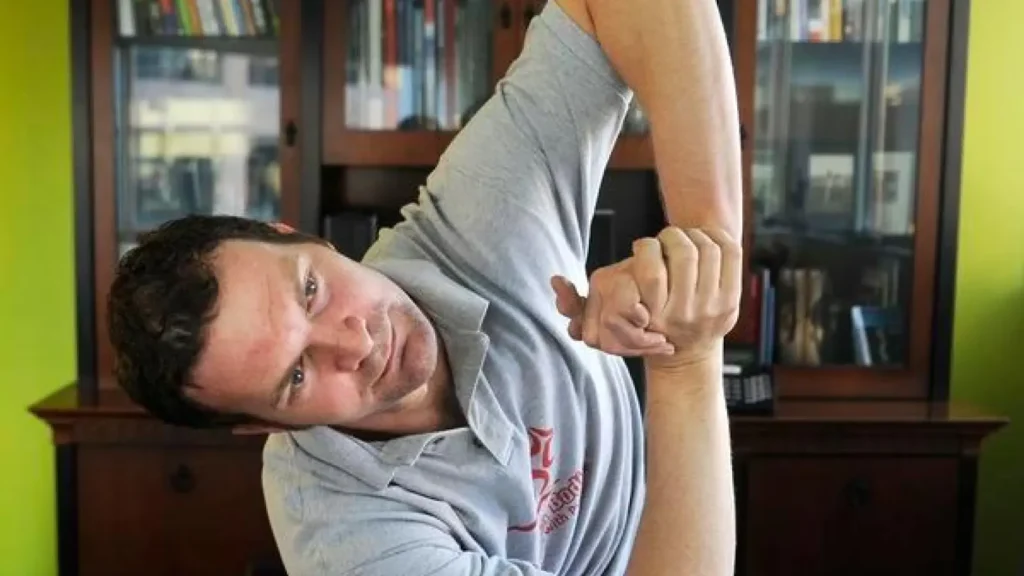
Overhead Side Stretch Stand or sit up tall. Raise one arm overhead. Slowly lean to the other side. Notice how the side body expands and stretches. Hold 20 seconds per side.
Shoulder Rolls and Cross-Body Arm Stretch Gently roll your shoulders back 10 times. Then pull one arm across your chest. Hold 20 seconds per side. This keeps the shoulder joint mobile and prevents stiffness from daily activities.
Flexibility Milestones for Adults Over 50
| Age Group | Realistic Flexibility Goal | Key Focus Areas |
|---|---|---|
| 50–59 | Maintain current range of motion | Hips, hamstrings, shoulders |
| 60–69 | Slow flexibility loss by 50% | Balance, spine, ankles |
| 70+ | Improve functional movement | Core stability, hip mobility |
The 2026 Health Guide states something important: becoming a gymnast isn’t the end goal. The goals are to move better, experience less pain, and maintain independence as you age.
Putting It All Together: A Weekly Stretching Schedule
Here’s how to put all five routines together within a practical weekly calendar:
| Day | Recommended Routine | Duration |
|---|---|---|
| Monday | Morning Wake-Up + Desk Worker Routine | 20 min |
| Tuesday | Athletic Performance (if active) + Stress-Release | 25 min |
| Wednesday | Morning Wake-Up + Aging Well Plan | 20 min |
| Thursday | Desk Worker + Stress-Release | 20 min |
| Friday | Athletic Performance + Morning Wake-Up | 25 min |
| Saturday | Full Stress-Release Routine | 15 min |
| Sunday | Gentle Aging Well Sequence + Rest | 15 min |
You are not obligated to follow this exactly. Select the routines that fit your life and build them in as you proceed.
Common Stretching Mistakes to Avoid
Even with the best of intentions, people stretch the wrong way. Here are the major mistakes the 2026 Health Guide warns against:
Holding your breath. Breathing is essential during stretching. Breathe out as you go deeper into the stretch. Inhale as you release.
Stretching cold muscles. Never start stretching hard right after waking up or before any movement. Walk for 5 minutes first.
Rushing through it. A 5-second hold on a stretch does next to nothing. Aim for 20–45 seconds minimum.
Ignoring pain signals. You should feel a light pulling sensation. Sharp, shooting, or joint pain is not normal. If something hurts a lot, stop right away.
Being inconsistent. One perfect stretch session does not erase weeks of tightness. Even 10 minutes a day is much more useful than infrequent lengthy sessions.
FAQs — 5 Routines from the 2026 Health Guide
Q: When will I see results from stretching every day? Most people see a change in stiffness and discomfort within 2–3 weeks of regular stretching. Big improvements in flexibility usually come after 6–8 weeks.
Q: Do I need to stretch every single day? Yes — gentle stretching every day is safe and very good for you. Unlike heavy strength training, your muscles don’t require full rest days to recover from stretching.
Q: Can I do these routines if I have a back injury? Many of these stretches are appropriate for people with mild back problems, but if you’re working with an existing injury, always check in with your doctor or physical therapist before following any routine.
Q: Isn’t yoga just stretching? Yoga does involve stretching but also includes balance, breathing, and strength. The 2026 Health Guide routines are focused on stretching and don’t require any yoga background.
Q: What time of day is most effective for stretching? It depends on your goal. Stretching in the morning reduces stiffness and energizes you for the day ahead. Evening stretching relieves stress and promotes better sleep. The best time is whatever one you will actually stick to.
Q: Is any equipment needed for these routines? No special equipment is required. A yoga mat is useful but not essential. The chair-based routines require just a sturdy chair and a wall.
Q: Can children or teenagers do these stretches? Absolutely. These routines are appropriate for all ages. The Athletic Performance routine will be especially useful for teens who are active in sports.
The Bottom Line
Stretching isn’t glamorous.
It doesn’t burn massive calories. It doesn’t build big muscles. It won’t go viral on social media.
But it may be the most important thing you’re not doing right now.
The 5 essential stretching routines from the 2026 Health Guide cover every chapter of life and every type of body. They take 10–25 minutes. They require no gym. And the advantages — less pain, improved posture, better sleep, sharper athletic performance, and healthier aging — are very real.
Focus on one routine this week. Just one.
Choose the one that addresses your biggest issue at the moment — morning stiffness, desk-induced pain, athletic recovery, stress, or aging joints. Do it for 7 days in a row. Then build from there.
Your body has been waiting for this.