
Sleep Is the Most Underused Health Tool of 2026
Everyone talks about diet and exercise. But sleep? It still doesn’t receive the respect it deserves.
Here’s the thing: bad sleep ruins all of it. It slows your metabolism, muddles your thinking, undermines your immune system and even makes you gain weight more quickly.
By 2026, the science of sleep had advanced tremendously. 7–9 hours of good quality sleep is not a luxury — it’s a biological imperative, researchers now confirm.
The good news? You don’t need pills or fancy devices to sleep better. You only need the right habits.
In this guide, we will cover 8 sleep health tips that actually work. Each is action-oriented, approachable and well-founded in actual science.
What Happens to Your Body When You Don’t Sleep Enough
Before getting into the tips, here’s what you’re playing for.
Lack of sleep does more than just make you tired. It sets off a chain reaction inside your body that has an impact on nearly every system.
| What Gets Affected | What Happens Without Enough Sleep |
|---|---|
| Brain function | Memory loss, reduced focus, slower reaction time |
| Metabolism | Increased hunger, weight gain, insulin resistance |
| Immune system | Higher risk for illness and infections |
| Heart health | Elevated blood pressure and inflammation |
| Mental health | More anxiety and depression, mood swings |
| Muscle recovery | Slower healing process, less strength gained |
One bad night can affect your mood and performance the following day. Chronic sleep loss? That is a long-term health crisis in the making.
The 8 Proven Sleep Health Tips for 2026
Tip 1: Lock In a Sleep Schedule — Even on Weekends
Your body operates on a 24-hour internal clock called the circadian rhythm. This clock governs when you feel sleepy and when you feel alert.
You throw this clock out of whack when you go to bed and wake up at different hours every day. The result? You feel sluggish, unable to focus and fatigued — even after spending a full night in bed.
The solution is straightforward: choose a bedtime and a wake time. Make them and stick to them every single day — including Saturday and Sunday.
How to start:
- Pick a wake-up time that suits your schedule
- Go back 7–9 hours to find your perfect bedtime
- Set an alarm for both sleep time and wake time for the first 2 weeks
- Gradually wake up earlier by 15 minutes until you reach your goal
Within 2–3 weeks, your body adapts. Falling asleep becomes easier. Waking up feels more natural.
2026 sleep insight: Sleep scientists have begun to speak of “social jetlag” — the tired feeling that results from altering your sleep schedule on weekends. It replicates the effects of true jetlag and can take days to bounce back from.
Tip 2: Treat Your Bedroom as a Sleep-Only Environment
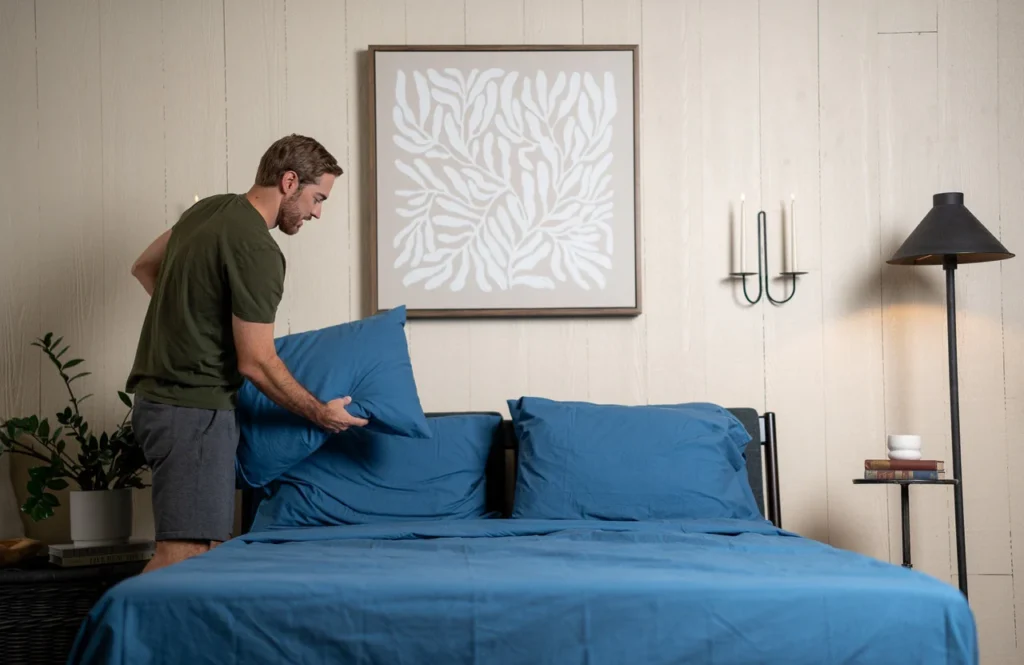
For the most part, people use their bedroom for everything — working, scrolling, watching shows, eating. Then they start wondering why they can’t get to sleep.
Your brain is a pattern-recognition machine. If you have stimulating activity in bed, your brain stops associating the bedroom with sleep. Instead, it remains alert whenever you lie down.
This is known as conditioned arousal — and it’s one of the most common but least visible causes of insomnia.
How to correct your bedroom environment:
- Do not allow work, laptops or phones in the bedroom
- Only use your bed for sleep and rest
- Keep the room cool — between 60–67°F (15–19°C) is the scientifically optimal range
- Block out light with blackout curtains or a sleep mask
- Try earplugs or a white noise machine to block out noise
Make your bedroom a cave — dark, quiet and cool. That’s the environment your body evolved to sleep in.
| Bedroom Factor | Ideal Setting | Why It Matters |
|---|---|---|
| Temperature | 60–67°F (15–19°C) | Encourages a drop in body temperature, which triggers sleep |
| Light | Completely dark | Signals the release of melatonin |
| Noise | Quiet or white noise | Protects against sleep disruptions |
| Scent | Lavender (optional) | Associated with less anxiety and better quality sleep |
| Clutter | Minimal | Reduces mental stimulation before bed |
Tip 3: Put Down Screens One Hour Before Sleep
This one is difficult for many people. Yet it could be the most powerful change you ever make.
Blue light comes from phones, tablets, TVs and laptops. This particular wavelength of light tells your brain that it’s daytime. It inhibits melatonin — the hormone that makes you want to sleep.
Your brain thinks it’s 2 PM when you scroll through your phone at 10 PM. Melatonin gets blocked. Sleep gets delayed.
What to do instead during the hour before bed:
- Read a real book or magazine
- Stretch or do light yoga
- Take a warm shower or bath
- Listen to soothing music or a podcast
- Journal — even 5 minutes goes a long way
If you do have to use a screen, switch your phone to night mode and reduce the brightness all the way down. But ideally, put it in a separate room altogether.
2026 tip: A “digital sunset” — a distinct cutoff time for all screens — is increasingly being recommended by sleep coaches. Treat it like sunset itself. Once it hits, screens go off.
According to the Sleep Foundation, blue light exposure in the evening is one of the leading causes of delayed sleep onset in adults and teenagers alike.
Tip 4: Be Mindful of What You Eat and Drink Before Bed
What you eat at night directly impacts the quality of your sleep.
Most people know that coffee can keep you awake. But the timing and foods matter more than most realize.
Caffeine — a sly sleep-stealer:
The half-life of caffeine is roughly 5–6 hours. That means by having a coffee at 3 PM, you still have half of that caffeine in your system at 8–9 PM.
For optimal results, eliminate all caffeine after 2 PM. This encompasses coffee, tea, energy drinks, and even dark chocolate.
Alcohol — not the sleep aid you think it is:
Some people consume alcohol to help them “wind down.” It does make you a little sleepy at first. But alcohol breaks apart your sleep cycles, suppresses REM sleep and causes you to wake up in the night.
You may fall asleep more quickly — but the quality of that sleep is drastically worse.
Foods that actually help sleep:
| Food | Sleep Benefit |
|---|---|
| Tart cherries | Natural source of melatonin |
| Kiwi fruit | Shown to improve sleep onset and duration |
| Almonds | High in magnesium, which relaxes muscles |
| Oatmeal | Triggers mild insulin response that promotes sleepiness |
| Warm milk | Contains tryptophan, which converts to serotonin |
| Chamomile tea | Contains apigenin, a calming compound |
Steer clear of large meals within 2–3 hours of your bedtime. Digestion competes with sleep — your body can’t do both at full blast.
Tip 5: Get Moving — But Time It Right
Regular exercise is one of the most potent tools for sleep health. Regular exercisers fall asleep more quickly, sleep more soundly and are less likely to wake up through the night.
But timing matters.
Exercising in the morning or early afternoon raises your body temperature, which then drops dramatically by bedtime — and that’s a cue for sleep.
Working out right before bed can have the opposite effect. It gets your heart rate up, rushes adrenaline through your system, and for some people delays the onset of sleep.
Best exercise timing for sleep:
| Exercise Time | Effect on Sleep |
|---|---|
| Morning (6–9 AM) | Helps regulate your circadian rhythm and boosts daytime energy |
| Afternoon (1–5 PM) | Best window — body temperature peaks and then drops for sleep |
| Early evening (5–7 PM) | Fine for most people |
| Late evening (after 8 PM) | May delay sleep onset in sensitive individuals |
Best types of exercise for sleep quality:
- Aerobic exercise (walking, jogging, cycling) — increases deep sleep stages
- Strength training — enhances slow-wave (restorative) sleep
- Yoga and stretching — lowers cortisol and calms the nervous system
Even a daily 20–30 minute walk can make a measurable difference in sleep quality within just one week.
Tip 6: Establish an Effective Wind-Down Routine
Your body requires time to unwind from the hustle and bustle of the day before entering sleep. You can’t go from full speed to sleeping in five minutes — at least not sustainably.
A wind-down routine tells your brain and body that sleep is imminent. The routine itself becomes a sleep trigger over time.
A simple 30-minute wind-down routine:
- 9:30 PM — Screens off. Dim the lights in your home.
- 9:35 PM — Take a warm shower or bath. (The subsequent drop in body temperature encourages sleepiness.)
- 9:50 PM — Put on comfortable sleepwear. Make your bed feel inviting.
- 9:55 PM — Read, journal, or listen to something soothing.
- 10:00 PM — Lights out.
It does not have to be complicated. It just has to be consistent.
The key is repetition. Every night, do the same things in the same order. Soon, starting your routine will automatically make you feel sleepy.
2026 sleep science note: Researchers refer to this as a “pre-sleep ritual.” Research indicates that consistent rituals before bedtime can reduce the time it takes to fall asleep by up to 50% in people with mild insomnia.
Tip 7: Corral Stress Before It Steals Your Sleep
Stress and sleep are locked in a vicious cycle. Stress prevents you from sleeping. Poor sleep makes stress worse. And so the cycle continues.
Stress is one of the most commonly reported causes of sleep problems globally in 2026. The endless mental chatter that begins as soon as your head hits the pillow — the worries, to-do lists and replayed conversations — is a direct product of unmanaged stress.
Practical stress-management tools for better sleep:
The brain dump method: Before going to sleep, write down everything on your mind. Tasks, worries and ideas — all of it. Once something is on paper, your brain doesn’t have to hold onto it anymore. That alone can significantly cut sleep-onset time.
Box breathing: Inhale for 4 counts, hold for 4 counts, exhale for 4 counts, hold for 4 counts. Repeat 4–6 times. This triggers your parasympathetic nervous system — the rest-and-digest state — and physically calms your body.
Progressive muscle relaxation: Starting from your toes, tense each muscle group for 5 seconds then release. Work your way up to your face. By the end, your entire body is relaxed.
Gratitude practice: Write down 3 things you’re grateful for before sleep. Research suggests this moves your brain out of threat-detection mode and lowers cortisol levels before sleep.
| Stress Tool | Time Needed | Effectiveness |
|---|---|---|
| Brain dump journaling | 5–10 minutes | High |
| Box breathing | 3–5 minutes | High |
| Progressive muscle relaxation | 10–15 minutes | Very high |
| Gratitude journaling | 5 minutes | Moderate–High |
| Meditation app | 10–20 minutes | High |
Tip 8: Expose Yourself to Morning Sunshine Every Day
This tip surprises most people. But it could be the most overlooked sleep health habit of 2026.
Many experts say getting natural sunlight within 30–60 minutes of waking up is the single most powerful thing you can do to regulate your sleep cycle.
Here’s why it works: morning light alerts your circadian clock that the day has begun. This starts a precise countdown. About 14–16 hours later, your body starts releasing melatonin — and you naturally get drowsy at the right time.
Without that early-morning light signal, your whole sleep-wake cycle drifts. You’re less alert in the morning, less sleepy at night and your sleep quality diminishes.
How to get your fix of morning light:
- Get outside within 30–60 minutes of waking up
- Spend at least 10–20 minutes in natural daylight
- Do not wear sunglasses during this time (light must reach your eyes)
- Spend more time outside on cloudy days — at least 20–30 minutes
- If outdoor access is limited, a 10,000-lux light therapy lamp is a proven alternative
Morning light vs. no morning light — the difference:
| Habit | Effect on Sleep Timing | Effect on Sleep Quality |
|---|---|---|
| Morning sunlight daily | Strong circadian anchoring | Significantly improved |
| No morning light | Circadian drift | Fragmented, lighter sleep |
| Light therapy lamp | Similar to sunlight | Improved in most people |
This habit costs nothing. It takes 15 minutes. And the effect on your sleep health is significant.
How These 8 Tips Work Together
All of these sleep health tips are strong on their own. But put together, they form a 24-hour system — one that works not only at bedtime.
Think of it this way:
- Morning sunlight sets your clock
- Exercise deepens your sleep
- Food and caffeine timing keeps hormones in balance
- Stress management quiets your mind
- Screen cutoff allows melatonin to rise naturally
- Bedroom environment removes sleep barriers
- Wind-down routine signals your body to shift gears
- Consistent schedule locks in the rhythm
Together, these habits build what sleep scientists call sleep pressure — the natural biological urge to sleep that gets stronger the longer you’re awake and is properly anchored to a rhythm.
Sleep by the Numbers — What the Data Says in 2026
Here’s a look at the state of sleep health around the world today:
| Statistic | Data |
|---|---|
| Adults sleeping less than 7 hours a night | 1 in 3 |
| Productivity lost globally due to poor sleep | $411 billion per year (USA alone) |
| Increased risk of obesity with less than 6 hrs sleep | 30% higher |
| Increased risk of heart disease with chronic poor sleep | Up to 48% higher |
| Improvement in mood after one week of better sleep | Reported by 80%+ of participants in studies |
| Average time to see results from sleep habit changes | 2–4 weeks |
The numbers are clear. Sleep is not optional. It’s among the most important pillars of your general health — alongside nutrition and exercise.
For more in-depth health and wellness resources, visit Health Benefits 2026 — an authoritative destination for science-backed guidance on how to live better this year.
A Realistic 7-Day Plan to Start Sleeping Better Tonight
All 8 tips need not be applied simultaneously. Start small. Build momentum.
| Day | Focus Area | Action to Take |
|---|---|---|
| Day 1 | Schedule | Set a fixed bedtime and wake-up time |
| Day 2 | Morning light | Spend 15 minutes outside after waking |
| Day 3 | Screens | Set a screen cutoff one hour before bed |
| Day 4 | Bedroom | Adjust temperature, block out light and noise |
| Day 5 | Caffeine | Move your last coffee to before 2 PM |
| Day 6 | Wind-down | Create a simple 20–30 minute bedtime routine |
| Day 7 | Stress | Try brain dump journaling before bed |
By Day 7, you will have touched on all 8 pillars. Keep it up for 3–4 weeks and the results will speak for themselves.
FAQs About Sleep Health in 2026
Q: How many hours of sleep do adults actually need? A: The average adult requires about 7 to 9 hours a night. 7 hours is fine for some. Others need closer to 9. Age, activity level and health all matter. Teenagers require even more — about 8–10 hours.
Q: Is napping bad during the day? A: Brief naps of 10 to 20 minutes can increase alertness and improve mood without having a detrimental effect on sleep at night. Skip naps longer than 30 minutes or taken after 3 PM — those can make it harder to fall asleep at night.
Q: Do melatonin supplements actually help with sleep? A: Melatonin can help with specific problems like jetlag or adjusting to a new schedule. But it’s not a remedy for chronic insomnia. The habits in this guide are more potent and longer-lasting. Always talk with your doctor before taking any supplement.
Q: Why do I keep waking up in the middle of the night? A: Stress, alcohol, a too-warm bedroom, noise, blood sugar fluctuations and sleep apnea are common causes. Most people find that applying the tips in this guide — especially optimizing their bedroom environment and managing stress — resolves middle-of-the-night waking.
Q: What is sleep apnea and should I be concerned? A: Sleep apnea is a disorder in which your breathing repeatedly stops while you’re asleep. Signs include loud snoring, waking up with a dry mouth, morning headaches and feeling tired even after a full night’s rest. If you have reason to think you have sleep apnea, please see a doctor — it’s a serious but very treatable condition.
Q: Does working out at night really hurt sleep? A: It depends on the person. Some people find that intense exercise 1–2 hours before bedtime delays sleep. Others are not affected. Light exercise such as stretching or yoga in the evening actually helps most people sleep better. Know your own body.
Q: How long until these sleep tips start working? A: Most people feel changes in their energy and mood within the first week. More profound shifts in sleep quality tend to take 2–4 weeks of consistent habits. Keep at it — the compound effect is real.
Q: Is it true that you can also sleep too much? A: Yes. Sleeping more than 9–10 hours per night on a consistent basis has been associated with a greater risk of depression, heart disease and diabetes. More is not always better. Aim for the 7–9 hour range whenever possible.
The Bottom Line — Sleep Is Non-Negotiable in 2026
You can eat perfectly. You can train hard five days a week. But if you’re sleeping poorly, you are leaving the most potent health lever untouched.
Sleep is when your brain detoxifies. It’s when your muscles repair. It’s when your hormones reset and your immune system rallies.
The 8 proven sleep health tips in this guide are not complicated. They don’t cost money. All they need is a decision — and then follow-through.
Here’s your takeaway plan:
- Go to bed and wake up at the same time starting tonight
- Get outside for sunlight tomorrow morning
- Set a caffeine cutoff at 2 PM
- Put your phone in another room one hour before bed
- Cool your bedroom and block out any light
- Establish a simple wind-down routine of 20–30 minutes
- Start a brain dump journal to unload stress before bed
- Keep moving every day — even just a 20-minute walk
Do these things consistently for 30 days. You will feel an undeniable difference — mentally, physically and emotionally.
Better sleep is not a dream. It’s a decision.
Start tonight. Your body is ready. Give it the rest it deserves.