Your Mind Needs as Much Attention as Your Body
Everyone talks about physical health.
Eat better. Exercise more. Sleep longer.
But mental health? It gets shoved to the back seat much of the time — until something falls apart.
The reality? Your brain doesn’t take a single hour off, much less a full day. It controls your emotions, your decisions, your relationships, and your stress. When it fails to receive the care it deserves, everything else in your life begins falling apart.
The 2026 Health Guide devotes a whole section to mental wellness — and it’s about time. Mental health problems are increasing across the generations. Anxiety, burnout, loneliness, and chronic stress have become common rather than rare. These are daily trials faced by millions of people.
But what the 2026 Health Guide makes crystal clear is that you don’t have to wait until you are in crisis to start caring for your mental health. The best time to cultivate healthy mental habits is now — before the going gets tough.
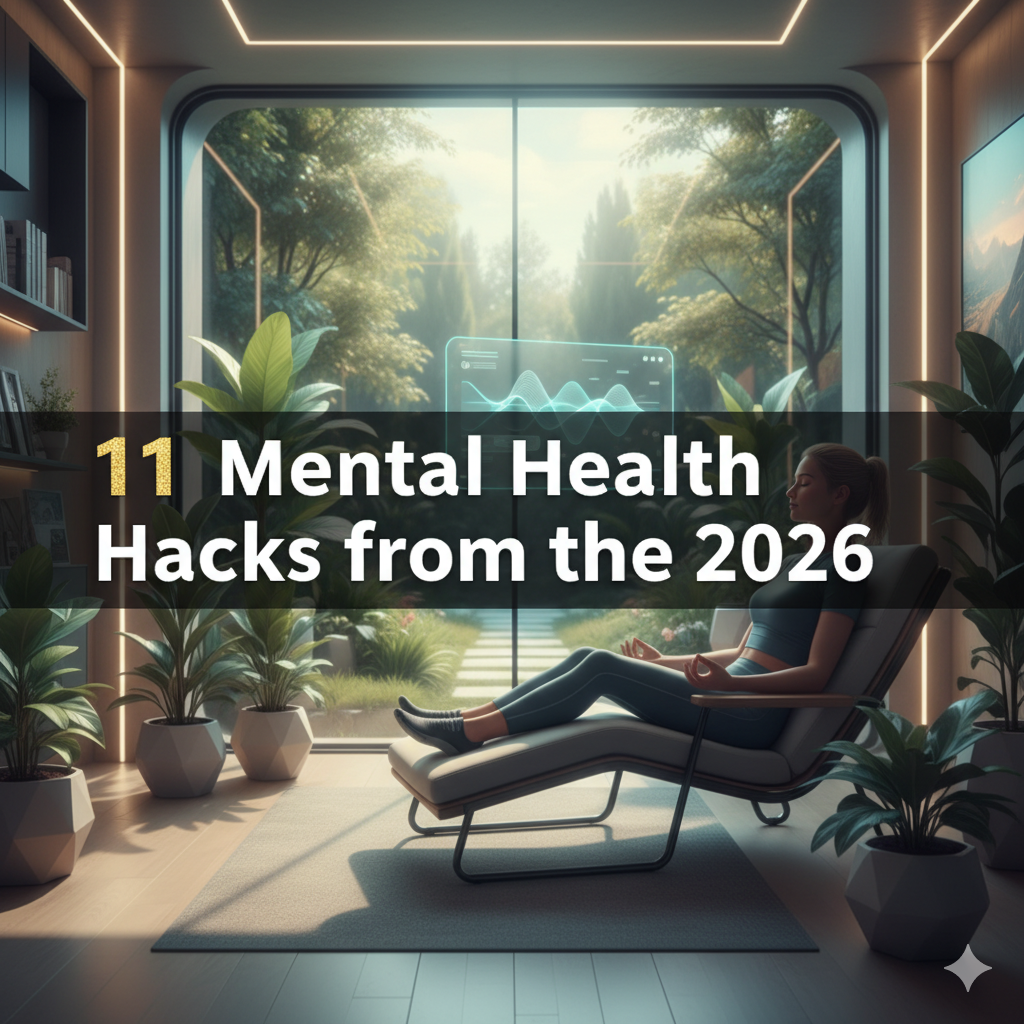
Here, in plain, simple language, is a breakdown of the 11 smart mental health strategies from the 2026 Health Guide. These aren’t fancy therapy techniques or costly treatments. These are practical, evidence-based habits we can all adopt today.
Let’s dig in.
Why Mental Health Strategy Really Works
Before we jump into the strategies, it’s helpful to know why they work.
Your brain is not fixed. It can evolve and it can pivot. Scientists call this “neuroplasticity.” It means that the habits you develop — good or bad — literally change how your brain works over time.
When you practice healthy mental habits regularly, you are reinforcing the areas of your brain responsible for calm thinking, emotional regulation, and problem-solving. You weaken the stress pathways that trigger anxiety and panic.
In short: mental health strategies work because your brain is adaptable and responds to practice, just like a muscle responds to exercise.
The 2026 Health Guide bases all 11 of its mental health strategies on this foundation.
Strategy #1 — Begin Each Day With an Intention, Not a Notification
The Morning Mindset Trap
Most people wake up and start reaching for their phone.
In that first minute, they’re consuming emails, scrolling news, and absorbing strangers’ troubles. Their nervous system spikes before they’ve even had breakfast.
The 2026 Health Guide refers to this as the “notification trap” — and it’s among the quickest ways to ruin your mental state even before the day starts.
What to Do Instead
Set an intention before you check anything.
An intention is simply a one-sentence focus for your day. Something like: “Today I’ll remain patient with my coworkers” or “Today I’ll take it one step at a time.”
It takes 30 seconds. But it changes your mindset from reactive to proactive. You get to start your day on your terms — not your phone’s.
Strategy #2 — Create a Mental Health Floor, Not Only a Ceiling

Don’t Only Care About the Good Days
Mental health is something that many people only think about when they are at a low point. They are scrambling their way out of the pit.
The 2026 Health Guide inverts this notion. Rather than fixating solely on the ceiling — maximum happiness, zero stress, perfect peace — it suggests constructing a mental health floor. A bare minimum of daily care that allows you to stay afloat even on your worst days.
What a Mental Health Floor Looks Like
| Daily Habit | Minimum Dose | Why It Matters |
|---|---|---|
| Sleep | 7 hours | Mood and cognition regulation |
| Movement | 20 minutes | Tension release and mood lifting |
| Social connection | 1 meaningful interaction | Reducing loneliness |
| Quiet time | 10 minutes | Lowering cortisol levels |
| Nourishing food | 3 balanced meals | Stabilizing blood sugar and mood |
You don’t need to be perfect. Most days it’s simply about getting to your floor.
Strategy #3 — Use the “Name It to Tame It” Technique
The Surprising Power of Labeling Your Emotions
When you get overwhelmed, your brain’s emotional alarm system — the amygdala — takes over. Rational thinking shuts down. You react instead of respond.
The 2026 Health Guide highlights one tool that is simple but backed by research: name your emotion out loud or in writing.
When you label what you’re experiencing — “I feel anxious,” “I’m disappointed,” “I am overwhelmed” — it turns on the logical portion of your brain. This actually calms the emotional alarm down.
How to Practice It Daily
- When something upsets you, pause for 5 seconds
- Ask: “What am I really feeling right now?”
- Identify it specifically — not just “bad” or “stressed,” but “frustrated,” “scared,” or “embarrassed”
- Record it in a journal or speak it softly to yourself
This technique is used by therapists, athletes, and executives alike. And it’s completely free.
Strategy #4 — Create Boundaries That Actually Protect Your Energy
The Burnout Pipeline
Burnout doesn’t happen overnight.
It accumulates over time — through too many “yes” answers, too many late nights, too many people whose needs you put ahead of your own. And before you realize it, your emotional tank is empty.
The 2026 Health Guide identifies poor boundaries as one of the top contributors to mental health decline — particularly in adults aged 25–45.
Setting Boundaries Without the Guilt
Establishing a boundary is not being selfish. It means being sustainable.
Here are three healthy boundary-setting steps from the 2026 Health Guide:
Step 1 — Identify your energy drains. Which situations, people, or tasks consistently leave you feeling depleted? Be honest.
Step 2 — Decide your limit. How much of that can you handle before your wellbeing suffers?
Step 3 — Communicate it simply. You don’t owe anyone a lengthy explanation. “I can’t take that on right now” is a complete sentence.
Boundaries do for your mental energy what a fence does for a garden. Without them, everything gets trampled.
Strategy #5 — Move Your Body to Clear Your Mind
Exercise Is Mental Health Medicine
This one is backed by mountains of research.
Physical movement — even a brief walk — triggers the release of endorphins, serotonin, and dopamine. These are natural mood-boosters for your brain. They alleviate anxiety, lift depression, and enhance focus.
The 2026 Health Guide does not ask you to run marathons. It simply advises moving your body for at least 20–30 minutes most days.
Best Movements for Mental Health
| Type of Movement | Mental Health Benefit | Ideal Duration |
|---|---|---|
| Walking (outdoors) | Reduces anxiety, boosts creativity | 20–30 min |
| Yoga or stretching | Lowers cortisol, enhances mood | 20–40 min |
| Dancing | Releases joy, alleviates loneliness | 15–20 min |
| Strength training | Builds confidence, reduces depression | 30–45 min |
| Swimming | Full-body relaxation, stress relief | 20–30 min |
The best exercise for mental health is the one you will actually do. Pick what you enjoy.
For more practical wellness tips that pair beautifully with these movement habits, visit Health Benefits 26 — a trusted resource for everyday health and wellbeing guidance.
Strategy #6 — Sleep Like Your Brain’s Life Depends on It (Because It Does)

How Your Mental Health Suffers With Too Little Sleep
Sleep deprivation is more than just making you tired.
It makes you emotionally fragile. It increases anxiety. It compromises your capacity to deal with stress. It impairs memory and decision-making. Research consistently shows that poor sleep is one of the most powerful predictors of poor mental health.
The 2026 Health Guide positions sleep as a fundamental pillar of mental wellness — not an indulgence.
The 2026 Sleep Reset Framework
| Sleep Habit | What It Does |
|---|---|
| Same bedtime every night | Regulates your internal clock |
| No screens 45 minutes before bed | Reduces stimulation and blue light exposure |
| Cool, dark room | Triggers deeper sleep cycles |
| No caffeine after 2 PM | Prevents cortisol spikes at night |
| Wind-down routine (reading, stretching) | Signals the brain to slow down |
Seven to nine hours of quality sleep is not laziness. It’s the bedrock of every other mental health strategy on this list.
According to the National Institute of Mental Health, taking care of your body — including getting enough sleep — is one of the foundational steps to supporting good mental health.
Strategy #7 — Cut the News Cycle, Not the World
How a Constant News Cycle Impacts Your State of Mind
Staying informed is important.
But there is a difference between being informed and being overwhelmed.
The 24-hour news cycle is designed to keep you anxious and engaged. Every headline is urgent. Every story is a crisis. If you’re taking this in constantly, your nervous system stays in a low-level state of alarm — even when you’re physically safe.
The 2026 Health Guide describes this as “ambient anxiety” — and it’s more prevalent than ever.
A Smarter Way to Stay Informed
- Check the news once or twice a day — not constantly
- Give yourself only 15–20 minutes per session
- Choose two or three trusted sources instead of endless scrolling
- Avoid news consumption first thing in the morning or right before bed
- After reading, do something grounding — a walk, some deep breathing, or writing in your journal
You can be aware of the world without getting overwhelmed by it.
Strategy #8 — Talk to Someone — Anyone
The Loneliness Epidemic Nobody Talks About Enough
Loneliness is a major mental health problem.
Research has found that chronic loneliness increases the risk of depression, anxiety, cognitive decline, and even premature death. Yet in the age of social media — where everyone appears “connected” — more people report feeling profoundly alone than ever before.
The 2026 Health Guide addresses this directly. Human connection is not just important for mental health — it is essential.
How to Build Real Connection in a Digital World
You don’t have to overhaul your social life overnight. Start small.
One honest conversation a day. Not small talk — something real. Ask someone how they’re genuinely doing and actually listen to the answer.
Reach out first. Most people wait to be reached. Be the person who texts, calls, or suggests going for coffee.
Join something. A class, a club, a community group, a volunteer team. Few things build connection as quickly as shared activity.
If you’re struggling — tell someone. A friend, a family member, a therapist, or a support line. Asking for help is not weakness. It is the smartest thing you can do for your mental health.
Strategy #9 — Practice Gratitude Without Making It Feel Like a Chore
Why Gratitude Gets a Bad Reputation
“Just be grateful” is advice that often lands wrong.
When you’re struggling, being told to count your blessings can feel dismissive — even insulting. And that’s fair.
The 2026 Health Guide doesn’t ask you to pretend everything is fine. It encourages you to train your brain to also notice what is working — alongside what isn’t.
The Right Way to Practice Gratitude
The key is specificity. Vague gratitude (“I’m grateful for my life”) doesn’t do much. Specific gratitude (“I’m grateful that my friend texted to check on me today”) creates a real emotional response.
Here’s the gratitude practice recommended by the 2026 Health Guide:
- Each evening, write down 3 specific things that happened during the day that you’re grateful for
- They don’t have to be big — a good meal, a funny moment, a task you completed all count
- Write why each one mattered to you — this deepens the effect
- Do it consistently for 21 days and notice the shift in your baseline mood
| Gratitude Practice | Frequency | Impact on Mood |
|---|---|---|
| Specific evening journaling | Daily | High |
| Verbal gratitude to others | A few times a week | High |
| Mental gratitude scan | Anytime | Medium |
| Gratitude letter (unsent) | Monthly | Very high |
Strategy #10 — Build a Stress Exit Plan Before You Need One
Why Stress Hits Harder When You’re Unprepared
Stress is inevitable. But enduring it without a plan makes it far worse.
When stress arrives and you have no strategy ready, you revert to coping mechanisms that often make things worse — endless scrolling, overeating, isolating, or snapping at people you love.
The 2026 Health Guide recommends building a personal stress exit plan in advance — a short list of actions that reliably calm your nervous system.
Build Your Personal Stress Exit Plan
Think of this as a first-aid kit for your mind. Everyone’s plan looks slightly different. Here’s a framework to build yours:
Tier 1 — Quick relief (under 5 minutes): Deep breathing, cold water on your face, a short walk outside, listening to one calming song, or doing 10 slow stretches.
Tier 2 — Medium reset (5–20 minutes): Journaling, a phone call with a trusted friend, a full stretching routine, meditation, or some light movement.
Tier 3 — Full recovery (20–60 minutes): A long walk in nature, a bath or shower, cooking a nourishing meal, watching something comforting, or reading a book you enjoy.
Write your plan down. Keep it somewhere visible. When stress comes knocking — and it will — you’ll know exactly what to do.
Strategy #11 — Talk to Yourself Like You’d Talk to Someone You Love
The Invisible Bully Inside Your Own Head
Most people say awful things to themselves that they would never say to someone they care about.
“You’re so stupid.” “You always mess things up.” “Nobody really likes you.”
If a friend said these things, you’d walk away. But when your own inner voice says them, you accept them as truth.
The 2026 Health Guide identifies negative self-talk as one of the most damaging — and most overlooked — mental health habits. It erodes confidence, exacerbates anxiety, and deepens depression.
How to Change the Voice in Your Head
You can’t silence your inner critic completely. But you can challenge it.
Step 1 — Notice it. When a harsh thought arises, catch it. Don’t let it pass unchallenged.
Step 2 — Question it. Ask: “Would I say this to a friend in the same situation?” Usually the answer is no.
Step 3 — Reframe it. You don’t need to swing to toxic positivity. Just make the thought more fair and accurate. Replace “I’m terrible at this” with “I’m still learning and that’s okay.”
Step 4 — Repeat. This takes practice. The inner voice has had years of bad habits. Be patient with yourself.
| Negative Self-Talk | Reframed Version |
|---|---|
| “I’m such a failure” | “This didn’t work out — I’ll do it differently next time” |
| “I’m not good enough” | “I am moving forward and improving every day” |
| “Nobody cares about me” | “I can reach out and build connections” |
| “I can’t handle this” | “This is hard, but I have handled hard things before” |
| “I always mess up” | “I made a mistake — it doesn’t define me” |
How All 11 Strategies Work Together
These strategies are not mutually exclusive.
Sleep impacts your mood, which impacts your self-talk, which impacts your boundaries, which impacts your stress levels. Everything is connected.
The 2026 Health Guide doesn’t ask you to tackle all 11 at once. It recommends a layered approach — beginning with two or three strategies and expanding from there.
Here’s a simple starter plan:
| Week | Focus Strategies | Daily Time Needed |
|---|---|---|
| Week 1–2 | Sleep reset + Morning intention | 10–15 min |
| Week 3–4 | Movement + Gratitude journaling | 30–40 min |
| Week 5–6 | Boundaries + Name it to tame it | 15–20 min |
| Week 7–8 | Social connection + Stress exit plan | 20–30 min |
| Week 9+ | Layer in remaining strategies | Varies |
Small steps, taken consistently, lead to big results over time.
FAQs — The 2026 Health Guide: 11 Smart Mental Health Strategies
Q: Do these strategies replace professional therapy or medication? No. These strategies are powerful tools for everyday mental wellness, but they are not a substitute for professional mental health care. If you’re struggling with serious depression, anxiety, or other mental health conditions, please consult a qualified professional.
Q: How quickly will I see a change in my mental health? Most people notice subtle but meaningful shifts within 2–3 weeks of consistent practice. Deeper changes typically come about after 6–8 weeks. The key word is consistency — not perfection.
Q: Which strategy should I start with? Start with sleep or movement. These two impact mental health most broadly and most quickly. Once your baseline improves, the other strategies become easier to layer in.
Q: Are these strategies appropriate for teenagers and young adults? Absolutely. The 2026 Health Guide created these strategies to be accessible for all ages. In fact, establishing these habits young lays a significantly stronger foundation for mental health in adulthood.
Q: What if I use these strategies and still feel terrible? That is a signal to seek professional support — and there is nothing wrong with that. These strategies support mental health; they don’t cure every condition. A therapist, counselor, or doctor can provide further support tailored to your specific needs.
Q: Is it normal to struggle with the self-talk strategy? Very normal. Negative self-talk patterns generally develop over many years. It takes time and repetition to change them. Be patient and gentle with yourself — that patience is ironically part of the strategy itself.
Q: Can I do all 11 strategies every day? You don’t need to. Some are daily habits (sleep, movement, gratitude). Others are skills you develop and use when needed (stress exit plan, boundary setting, self-talk reframing). Think of them as a toolkit — you reach for different tools at different times.
The Bottom Line
Your mental health is not a luxury. It’s not something to be dealt with only when things fall apart.
It is the building block of everything — your relationships, your work, your physical health, your happiness, and your ability to cope with whatever life throws at you.
The 11 smart mental health strategies from the 2026 Health Guide aren’t complicated. They don’t need expensive equipment, a therapist on speed dial, or a tension-free life. They need something simpler: consistency and intention.
Choose one strategy that feels most accessible to you right now.
Maybe it’s fixing your sleep. Perhaps it’s about how you speak to yourself. Maybe it’s simply putting your phone down in the morning and setting an intention for the day.
Start there. Do it every day for two weeks. Then add another.
Your brain is waiting to be taken care of. The 2026 Health Guide provides the roadmap. Just take the first step.